
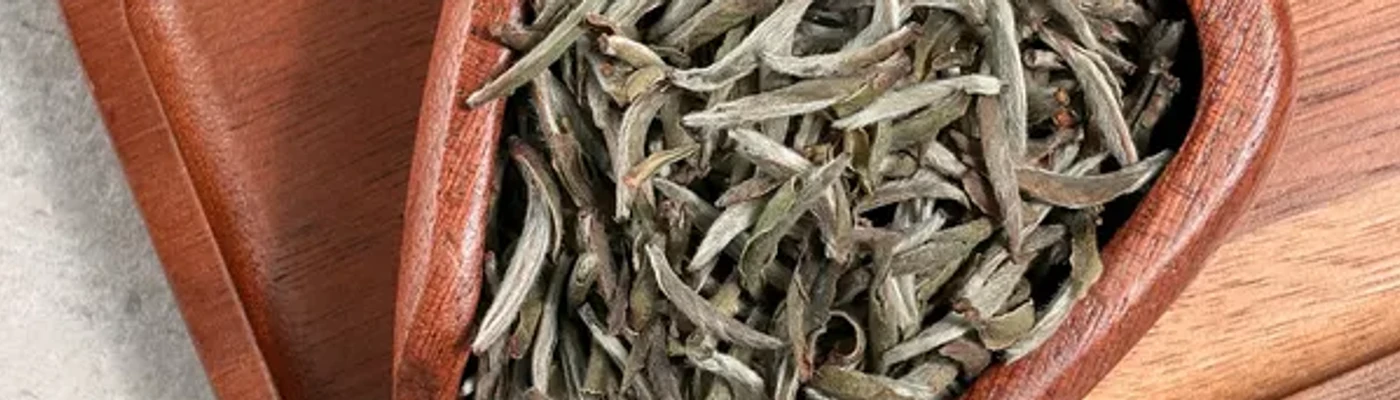
- Silver Needle tea
Silver Needle Tea in the UAE: A Complete Guide
There is a moment when you pour hot water over Silver Needle tea and watch what happens. The slender, silver-furred buds drift slowly downward, some standing upright for a second before settling, releasing a pale gold liquor that smells faintly of hay and honeysuckle. It is quiet and unhurried. The cup that follows is soft, naturally sweet, and so delicate that it almost feels like the tea is holding something back, asking you to pay closer attention. That quality, that deliberate subtlety, is what makes Silver Needle one of the most celebrated teas in all of Chinese tea culture, and one of the most rewarding for people who find it.
:strip_icc():strip_exif()/silver_needle_2024_1-01KNCG8W6B4677NTZ3K3WFC8RA.png)
2024 Fujian Silver Needle White Tea
From 59 AED
In the UAE, interest in premium Chinese white teas has grown steadily, and Silver Needle sits at the top of what is available to serious tea drinkers. This guide covers what it is, where it comes from, how it is made, what it tastes like, the health properties it carries, and how to brew it properly at home.
What Silver Needle Tea is?
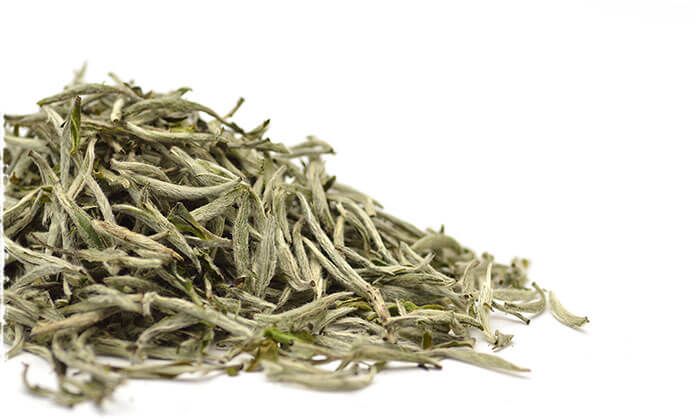
Silver Needle, known in Chinese as Baihao Yinzhen, translates literally as White Hair Silver Needle. Bai Hao means white hair, referring to the fine downy hairs that cover each tea bud. Yin Zhen means silver needle, describing the shape of those buds once dried: straight, slender, and tapered to a point like a sewing needle, with a soft silver-white sheen from the covering of hairs.
It belongs to the white tea category, which is the least processed of all six traditional Chinese tea types. The leaves are not pan-fired, not rolled, not shaped. The only processing that happens is a slow, controlled wither, where freshly picked buds are laid out in cool, well-ventilated conditions and allowed to dry naturally over 72 hours or more. This minimal handling preserves an extraordinary amount of the natural compounds in the leaf, which is part of what makes Silver Needle both distinctive in flavor and genuinely interesting from a health perspective.
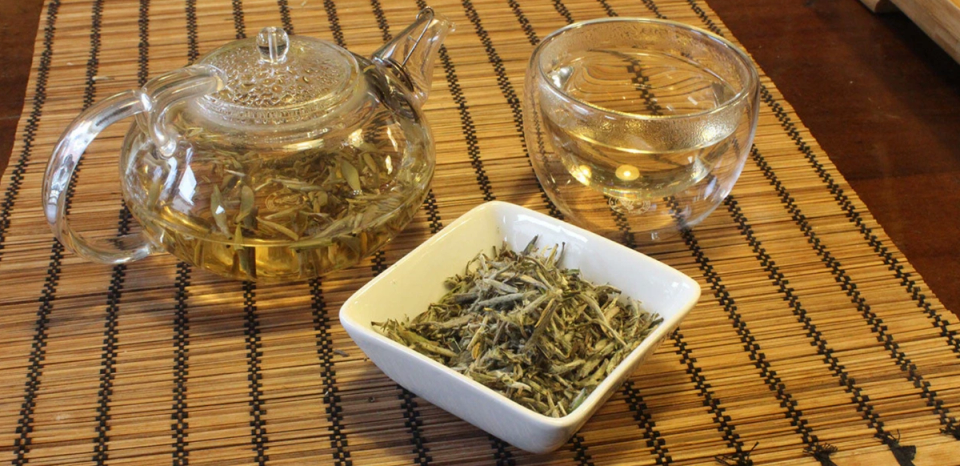
The tea is made entirely from the first bud of the tea plant, picked before it has opened, while it is still tightly furled and at its most concentrated. No leaves accompany it. Only the bud. This strict picking standard is what separates Silver Needle from other white teas like White Peony, which uses one bud and two young leaves, and gives it the lightest, most refined character in the entire white tea family.
Where It Comes From: Fujian Province
Silver Needle comes from Fujian Province in southeastern China, specifically from two counties that have historically produced the best versions: Fuding in the northeast and Zhenghe in the north of the province. Fuding is widely regarded as the home of white tea, and its local cultivar, the Fuding Da Bai, has been the foundation of Silver Needle production since around 1857, when farmers first realized the large, downy buds of this particular variety produced a noticeably superior tea.
The first Silver Needle was actually made in the early Qing Dynasty around 1796 from a smaller native cultivar, but that version was quite different from the tea available today. The shift to the Da Bai cultivar in the mid-1800s created the modern version, with its distinctively large, heavily silvered buds and the clean, sweet fragrance that defines quality Fujian white tea. By 1891, Silver Needle was being exported internationally, and in 1982, it was officially recognized as a National Famous Tea by China's Ministry of Commerce.
The two major styles differ subtly from each other. Fuding Silver Needle, known as Northern Style, is lighter in oxidation and generally more delicate, dried in shade or under gentle sun. Zhenghe Silver Needle, the Southern Style, undergoes slightly more oxidation during withering and has a fuller, slightly darker character with a bit more body. Both are excellent, and both are considered authentic, though Fuding Silver Needle tends to attract higher prices and more international attention.
The Harvest Window and Why It Matters
Silver Needle has one of the most restricted harvest windows of any tea. Picking happens only in early spring, typically from mid-March to the first days of April, a window of roughly three weeks. The buds must be picked on dry, sunny days and never when rain or morning dew is still on the leaves. Wet buds wither unevenly and produce a lower quality tea.
Only the single topmost bud is picked, and it must be in a specific stage of development: still closed, still tightly furled, plump with the energy of the season's first growth. Experienced pickers move through the tea gardens selecting individual buds by hand. There is no mechanical shortcut that produces the same result.
2024 Fujian Silver Needle White Tea
From 59 AED
This narrow window and labor-intensive harvesting are two of the main reasons that genuine Silver Needle is more expensive than most other teas and exists in limited quantities each year. The spring timing also matters because early spring buds contain the highest concentrations of amino acids, antioxidants, and the natural compounds that determine both the flavor and the health properties of the finished tea.
What Silver Needle Tastes Like
This is the question that matters most for anyone considering buying it, and the honest answer requires setting aside expectations from other teas.
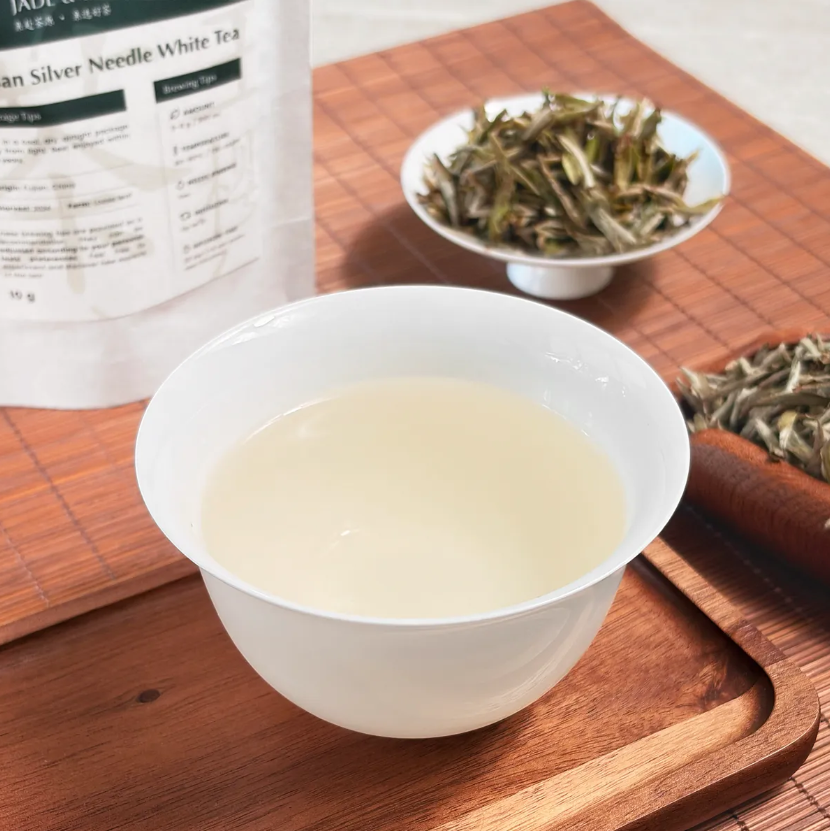
Silver Needle is not bold. It does not announce itself loudly or hit with a strong flavor. What it does instead is unfold. The first sip is light and clean, with a natural sweetness that feels more like the ghost of fruit than any specific flavor. A faint floral note sits in the aroma rather than the taste, often described as honeysuckle or fresh hay, and the texture of the liquor is slightly round and smooth in a way that feels different from the thinner body of most green teas.
What people who drink Silver Needle regularly talk about is the aftertaste. A clean, cooling sweetness lingers after each sip, rising from the back of the throat and staying there through several more sips. This quality, called hui gan in Chinese, the returning sweetness, is considered a mark of quality in fine teas, and Silver Needle expresses it gently but clearly.
The color of the brewed liquor is a very pale gold, almost clear in the early infusions, deepening slightly with longer steeping. Using a glass cup allows you to see the beauty of the unfurling buds in the water, which is part of the experience worth paying attention to.
Silver Needle is one of those teas that rewards slowing down. Drunk quickly while distracted, it barely registers. Drunk with attention, it rewards that attention considerably.
Health Properties Worth Knowing
Because Silver Needle is minimally processed, it retains higher concentrations of certain natural compounds than more heavily processed teas.
The catechins and polyphenols preserved in white tea have been studied for their antioxidant properties, which help protect cells from oxidative stress. White tea is consistently identified as one of the highest antioxidant tea categories precisely because so little heat is applied during production, meaning fewer of these compounds are broken down before the tea reaches the cup.
The L-theanine content in Silver Needle promotes calm, focused attention without the sharpness of caffeine alone. Because white tea contains less caffeine than green or black tea, it is often described as the best choice for people who are sensitive to caffeine but still want the mental clarity that tea's combination of caffeine and theanine provides.
In traditional Chinese medicine, white tea is considered cool in nature and is associated with clearing heat from the body, supporting the liver, and calming the mind. It has historically been described as a medicinal tea as much as a beverage, consumed as much for its effects on the body as for its flavor.
Silver Needle also contains fluoride and tannins that support oral health, and its antimicrobial properties have been studied for their potential to inhibit bacteria associated with dental decay. These are not dramatic claims but genuine, well-documented properties of white tea.
How to Brew Silver Needle Properly
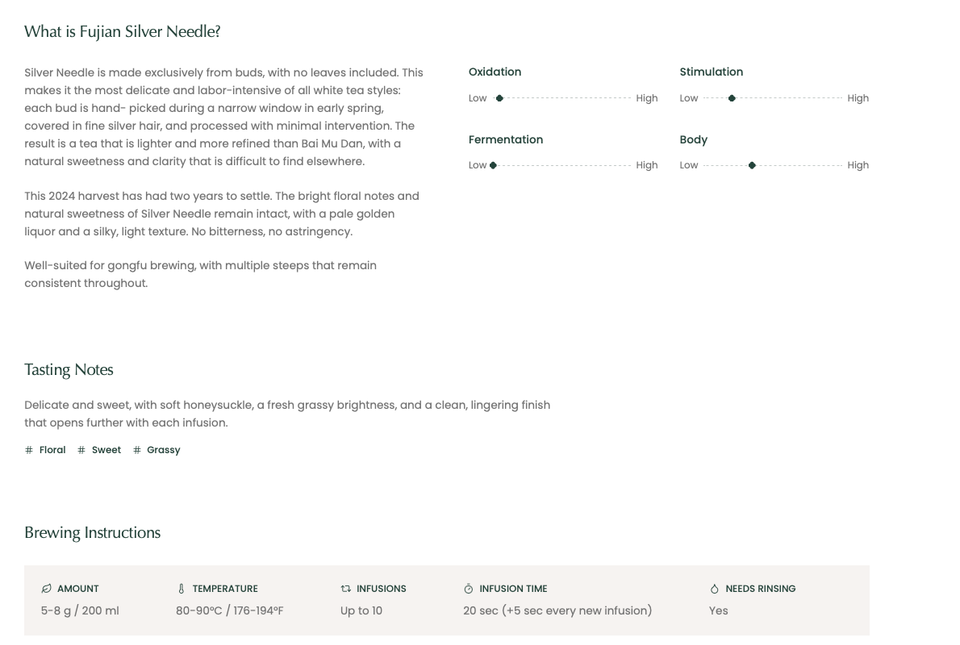
Temperature is the most important variable. Silver Needle brews best at 75 to 85 degrees Celsius. Water hotter than that scalds the delicate buds and drives the flavor profile flat. If you do not have a temperature-controlled kettle, boil water and let it sit uncovered for three to four minutes before pouring.
Use a glass cup or a gaiwan. Glass is ideal because it lets you watch the buds and the liquor together, which is part of the experience with this tea specifically. Use about 3 to 4 grams per 150ml of water.
Steep for 3 to 5 minutes on the first infusion. This is longer than most other teas brewed Gongfu style, because Silver Needle buds release their flavor more slowly than rolled or twisted leaves. The second infusion can last 5 to 6 minutes. A good quality Silver Needle gives three to four solid infusions before the flavor fades noticeably.
One approach worth trying is a cold brew. Place 5 grams of Silver Needle in 500ml of cold, filtered water and leave it in the refrigerator overnight. The result is a wonderfully clean, sweet, and lightly floral cup that pulls out different nuances than hot brewing. In the UAE's climate, this makes Silver Needle one of the most refreshing ways to drink quality tea through warmer months.
Dubai's tap water will flatten the delicacy of this tea noticeably. Filtered water or a good still bottled water is worth using here more than with any other tea.
Finding Silver Needle Tea in the UAE
Silver Needle is available from several specialty tea sellers in the UAE. Jade and Sakura carry it as part of their Chinese white tea range, sourced from Fujian Province, with delivery available across the UAE. For anyone looking for a genuinely sourced Baihao Yinzhen without going through international ordering, this is one of the more straightforward options currently available locally.
When buying any Silver Needle, check for clear origin information specifying Fujian Province, ideally either Fuding or Zhenghe. Spring harvest is worth prioritizing. Genuine Silver Needle should have uniform, plump, silvery buds with visible white hairs. If the buds look broken, dull, or lack the silvery coating, the quality is likely lower than it should be.
2024 Fujian Silver Needle White Tea
From 59 AED
Final Thoughts
Silver Needle is not a tea for rushing. It asks something of the person drinking it, mostly just attention and the willingness to sit with something quiet. In return, it gives a cup that is clean, naturally sweet, and genuinely calming in a way that feels earned rather than engineered.
For anyone in the UAE who has been drinking quality tea for a while and has not yet tried a proper Baihao Yinzhen, this is worth putting on the list. It is not the boldest thing you will ever drink. It might end up being one of the best.
Silver Needle tea
:strip_icc():strip_exif()/silver_needle_2024_1-01KNCG8W6B4677NTZ3K3WFC8RA.png)
Share this article